
Christine Lagarde said the prospect of rising interest rates in the US and China's slowdown are contributing to uncertainty and higher market volatility.

Equity benchmark Sensex slumped over 1,000 points to sink below the 55,000-level on Friday, tracking deep losses in IT, finance, banking and energy stocks amid widespread selling in the global markets. A weak rupee, surging crude prices and relentless foreign capital outflows further weighed on sentiment, traders said. The 30-share BSE index ended 1,016.84 points or 1.84 per cent lower at 54,303.44.
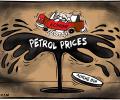
Amid news of a fuel shortage in some parts of the country and wider unrest over fuel issues in the neighbourhood, an analysis of the data from international tracker globalpetrolprices.com shows that the per litre price of petrol is higher in India than in seven out of its nine neighbours.

That is bad news for officials taking part in discussions at the International Monetary Fund and World Bank meetings this week.

While efforts are being mounted on a war footing to arrest its spread, COVID-19 will impact economic activity in India directly through domestic lockdown. The second-round effects, it said, would operate through a severe slowdown in global trade and growth.
'No Cold War should be reignited and no Ukraine-style crisis should be repeated in Asia'

Australian Foreign Minister Marise Payne and Defence Minister Peter Dutton from the Australian side will meet with External Affairs Minister (EAM) S Jaishankar and Defence Minister Rajnath Singh.

Waves of foreign portfolio investments worth over Rs 51,000 crore splashed into the Indian market in 2021 as overseas investors turned net buyers of domestic securities for the third straight year while excess global liquidity and other factors steered the ebb and flow of their investing ways. With the global financial system still flush with liquidity, emerging market assets, especially equities, might well remain the preferred investment avenue for many more months to come, experts opined. As the equities sizzled during most of 2021, that also saw economy slowly coming back into the recovery path, Foreign Portfolio Investors (FPIs) turned net buyers but their investment is much less compared to net inflows of Rs 1.03 lakh crore in 2020.

Adapting to the new hybrid normal of remote and office work, cautiously optimistic corporate are looking to hire more people and provide better appraisals in the new year as they step out of the pandemic-ravaged 2020. The coronavirus pandemic emerged as the biggest inflection point for the Indian job landscape. For the corporates, work-from-home and remote workers became the new normal and for the professionals, online learning and digital skills took centrestage.

India's economy, estimated to contract by 6.9 per cent in 2020 due to the coronavirus pandemic, is forecast to record a "stronger recovery" in 2021 and grow by 5 per cent, according to a UN report which said the country's current fiscal year budget points to a shift towards demand-side stimulus, with an uptick in public investment. The report, 'Out of the frying pan ...Into the fire?' published Thursday as an update to the Trade and Development Report 2020 by UN Conference on Trade and Development (UNCTAD) said the global economy is set to grow by 4.7 per cent this year, faster than the 4.3 per cent predicted in September 2020, thanks in part to a stronger recovery in the US, where progress in distributing vaccines and a fresh fiscal stimulus of $1.9 trillion are expected to boost consumer spending.
.jpg)
According to the global financial services major, the primary concern for the RBI at the moment has to be anchoring elevated inflation expectations and stabilising the currency, which could face renewed pressures if the Fed begins QE tapering this week, as widely expected.

Spread investments in equities, bonds, gold and cash to tackle volatility advise Nitin Singh, MD and head, and Vinay Joseph, director, investment strategy, Standard Chartered Wealth Management, India.

India is projected to see moderate average annual growth of 5.9 per cent during the 2014-18 period amid the country witnessing macroeconomic weaknesses, according to Paris-based think tank OECD.

The Reserve Bank on Friday retained the GDP forecast for the current financial year at 9.5 per cent and flagged global semiconductor shortages, elevated commodity prices and potential global financial market volatility as downside risks to economic growth. In his address after the three-day meeting of the rate-setting panel, RBI Governor Shaktikanta Das said recovery in aggregate demand gathered pace in August-September, and it is reflected in high-frequency indicators, like railway freight traffic; port cargo; cement production; electricity demand; e-way bills; GST and toll collections. "The ebbing of infections, together with improving consumer confidence, has been supporting private consumption," he said, and added the pent-up demand and the festival season should give further fillip to urban demand in the second half of the financial year.

'COVID-19 will not stop the expansion of China's 'infrastructure power'.'

Fed keeps rates unchanged, sets up possible December hike

'People always short-change the resilience of the economy.'

Stating that the economic costs of shutdown of the global economy are accumulating rapidly, Moody's projected that all G-20 advanced economies would contract by 5.8 per cent in 2020.

Despite lay-offs and the threat of automation, the industry will continue to be an important driver of growth in employment and GDP, says Ashok Soota.

Employees in India were more optimistic about the future of their national economy.

According to Knight Frank Research, 1.07 million sq ft of office space was transacted in Q4 FY13, thus showing a fall of 11 per cent compared to the same quarter last year.

'We expect the bull run to continue until economic growth continues.'

The accelerating pace of digitalisation, fuelled by the COVID-19 pandemic, has led to a record-breaking year for cybercrime with ransomware attacks rising 151 per cent in 2021, and an average of 270 cyberattacks per organisation being faced, a new study showed on Tuesday. The World Economic Forum's 'Global Cybersecurity Outlook 2022', released during its online Davos Agenda summit, further said that each successful cyber breach cost a company $3.6 million (nearly Rs 27 crore) last year, while the average share price of the hacked company underperformed NASDAQ by nearly 3 per cent even six months after the event in case of the breach becoming public. The WEF said the global digital economy surged on the back of the COVID-19 pandemic, but so has cybercrime and nearly 80 per cent of cyber leaders now consider ransomware a 'danger' and 'threat' to public safety.

Because of India's weak fiscal position, the plethora of debt-burdened infrastructure companies and the poor asset quality of public sector banks, economic growth in 2015-16 may be limited to about six per cent, say Shankar Acharya.

The department of economic affairs, in its Monthly Economic Review for September, said critical reforms undertaken by the government will put India to a strong and sustainable growth path in the long run.

Retail inflation dropped marginally to 7.01 per cent in June mainly due to slight easing in prices of vegetables and pulses, though it still remained above the Reserve Bank's comfort level for the sixth month in a row. The consumer price index (CPI) based inflation stood at 7.04 per cent in the preceding month of May and 6.26 per cent in June 2021. Inflation in the food basket in June 2022 was 7.75 per cent, compared to 7.97 per cent in the previous month, as per the National Statistical Office (NSO) data released on Tuesday.

For the BJP, the RSS' organisational heft is a prized asset, considering the slew of elections it faces this year, ahead of the Lok Sabha election in 2024.

'In FY23, PV sales are expected to end the year at a record 3.8 million units, up 26 per cent. In FY24, however, the industry is expecting 5-7 per cent volume growth'
Most Asian currency and equity markets too suffered steep losses due to US rate hike fears.

India's factory output climbed 22.4 per cent in March, benefiting from the base effect of the lockdown-marred month a year back as well as a turnaround in the manufacturing sector, while retail inflation slipped to a three-month low of 4.29 per cent in April. The high positive annual growth in the index of industrial production (IIP) in March 2021 came on back of a contraction of (-)0.9 per cent and (-)3.4 per cent in January and February 2021 respectively, according to the data released by the National Statistical Office (NSO) on Wednesday. This turnaround was led by recovery in the mining, manufacturing and electricity sectors.

But experts say downside limited, pockets of opportunities for investors

The global rating agency has, however, cautioned that India's fiscal position remains 'weak'.

Minutes of the MPC meeting show Das felt economy needs more monetary stimulus as inflation outlook remains uncertain.

As the COVID-19 pandemic continues to unravel in various parts of the country, the World Economic Forum on Monday announced the cancellation of its high-profile annual meeting for 2021 after postponing it at least twice along with two changes in venue. The next annual meeting will now take place in the first half of 2022, while the location and date would be determined after assessing the situation later this summer, said the Geneva-based organisation that has been hosting a yearly congregation of the rich and powerful from across the world in Swiss ski resort town of Davos for 50 years. This year's Davos summit was originally scheduled for January 2021, but was later moved to a different location in Switzerland, Lucerne, and then to Singapore with an August 2021 schedule.

The Survey shows fiscal consolidation despite slowdown in growth.

Observing that India's worsening COVID-19 situation and the strict measures to contain it have hit the economy hard, the rating agency said productive capacity has been severely disrupted since the start of the pandemic.

Investor wealth plummeted by nearly Rs 5 lakh crore in early trade on Monday as equity markets crashed tracking global equity selloff amid rising uncertainty over the economic impact of coronavirus outbreak. Market capitalisation (m-cap) of BSE-listed companies saw a massive decline after the 30-share index plunged 1515.01 points, or 4.03 per cent, to 36,061.61. The NSE Nifty too cracked 417.05 points, or 3.80 per cent, to 10,572.40.

Other large recipients are China ($64 billion), the Philippines ($28 billion), Mexico ($24 billion), Nigeria ($21 billion), Egypt ($18 billion), Pakistan ($17 billion), Bangladesh ($15 billion), Vietnam ($11 billion) and Ukraine ($9 billion).

The size of the GDP in the second quarter of 2018-19 is estimated at Rs 33.98 lakh crore, as against Rs 31.72 lakh crore a year ago

On gold buying occasions such as Akshaya Tritiya, Chiraj Mehta points out, investors are often confronted with the question: Should I make just a token purchase, or should I buy more towards building my allocation in the yellow metal?
